







SSDs Smart Security Devices
Cybersecurity Control Software
Interoperability
Artificial Intelligence
Our expertise provides clients with the best solution for their operations.
We explore your security ecosystem and configure our software to fit seamlessly into your operational context.
Companies that rely on Fractal to strengthen custody-chain integrity and anti-fraud protocols.


Smart
Security
Our Portfolio
Semi-active Electronic Seals
Enhanced control layers for critical operations and custody
Custody Chain Software Control
Security and compliance controls built around AAA principles.
Custody Chain Interoperability
Connect custody events with ERP/WMS/TMS and partners.
Electronic Seal Models
Who We Are
José Roberto Mesquita
Mary Anne Amorim
Rafael Solinski
Elio Santos
Francisco Mascaro
Feedback from teams operating in high-compliance, high-risk environments.
“Fractal raised our operational integrity standards by combining single-use electronic seals with anti-fraud protocols and audit-ready records. The integration with our systems reduced manual work and strengthened governance at critical points of the custody chain, bringing clearer support for audits and compliance.”

Mariana Teixeira
Frequently
Asked Questions
What makes Fractal’s Electronic Seals innovative?
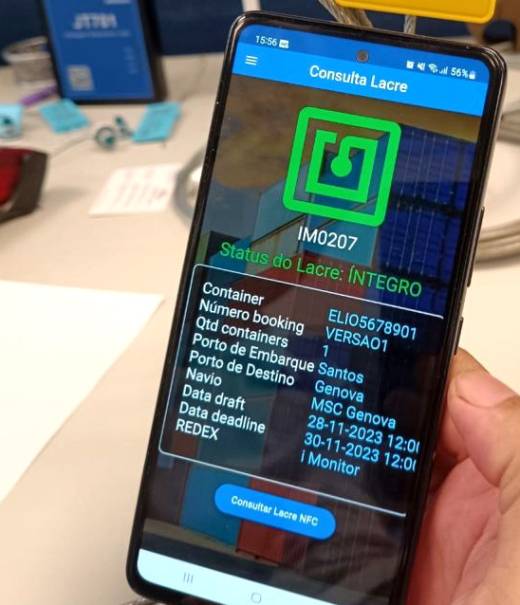
Fractal brings to the global market single-use electronic seals that combine NFC and RFID to create stronger anti-tamper evidence and auditable custody records. They are designed for operational simplicity, interoperability across stakeholders, and security-by-design helping reduce fraud exposure without relying on complex infrastructure.
What is AAA (Authorization, Authentication, and Auditing) and why does it matter?
AAA is a security model that ensures only authorized users can perform actions (Authorization), every action and device can be validated (Authentication), and all relevant events are recorded for review and compliance (Auditing). In logistics, AAA helps build trustworthy custody records and reduces gaps between physical security and digital governance.
How does interoperability work with ERP/WMS/TMS and partner systems?
The right model depends on your risk profile, operational checkpoints, and required level of evidence. IMQ100 is a passive NFC-only, single-use seal; IMC200 is passive dual-tech RFID/NFC; and IMC300 is semi-active dual-tech RFID/NFC—typically used when operations need a broader set of controls and richer custody-chain management.
How are tamper events detected and recorded?
Fractal electronic seals can detect manipulation attempts through anti-tamper mechanisms and register integrity status as part of the custody process. When combined with operational checkpoints (e.g., mobile validation and gate reads), events can be documented with timestamps, operator identification, and additional evidence to support audits and investigations.
Do Fractal solutions require infrastructure (readers, gates, mobile app)?
Infrastructure depends on the use case and operational environment. Some operations rely on mobile validation (NFC) at key checkpoints, while others benefit from RFID reads at gates and fixed control points, enabling automation and stronger control in critical passages.
Where does cybersecurity fit in the solution?
Cybersecurity protects the digital layer of custody-chain data—helping ensure events, identities, and records remain consistent, controlled, and audit-ready. Fractal combines physical security devices with software controls to reduce fraud risk and support governance across connected operations.
What makes Fractal's Electronic Seals innovative?
Effective technology and auditable event monitoring
Fractal is a pioneer in
developing low-cost,
single-use passive seals.
This innovation enables the integrated use of NFC and RFID simultaneously, eliminating the need for equipment returns and avoiding reverse logistics costs.
We understand that the security of your cargo is your peace of mind. That’s why we developed a system with the highest level of cybersecurity, ensuring that the cargo remains intact and that each part of the custody chain fulfills its role, also improving operational efficiency.